
- Services
- Data Analysis services
- Sample Work
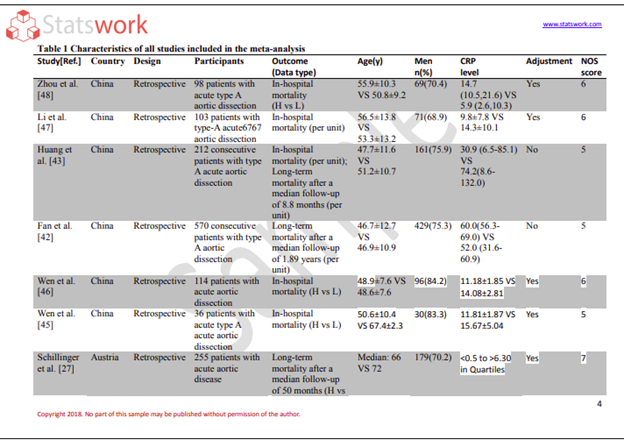
Data Analysis services
- Secondary Qualitative Research Services
- Secondary Quantitative Research Services
- Meta-Analysis Research services
- Sample Work
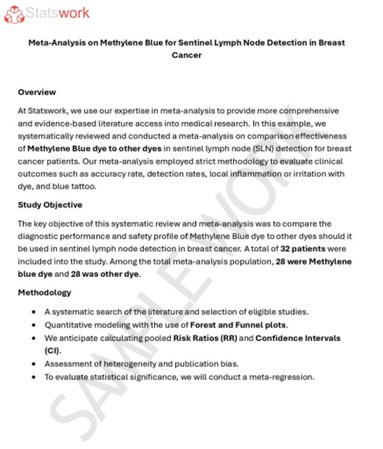
Meta-Analysis Research Services
- Data Collection Services
- Sample Work
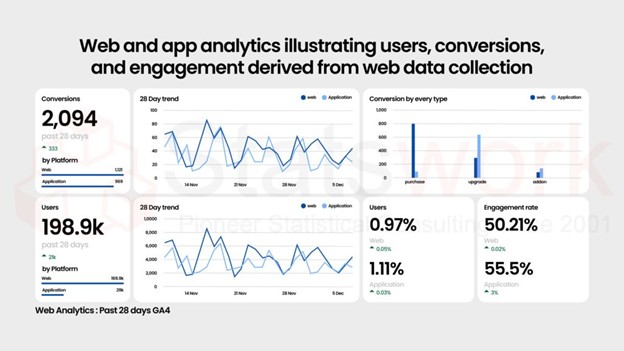
Data Collection Services
- Statistical & Biostatistics services
- Sample Work
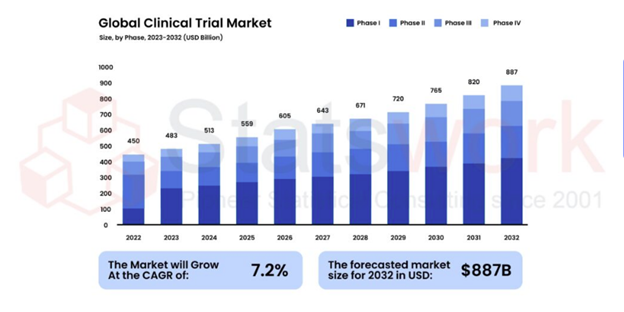
Statistical Programming & Biostatistics services
- Data Management Services
- Sample Work
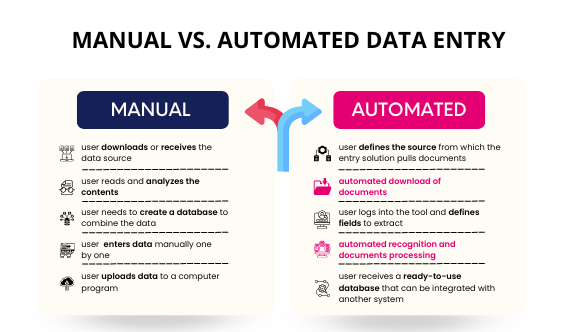
Data Management Services
- Research methodology services
- Sample Work
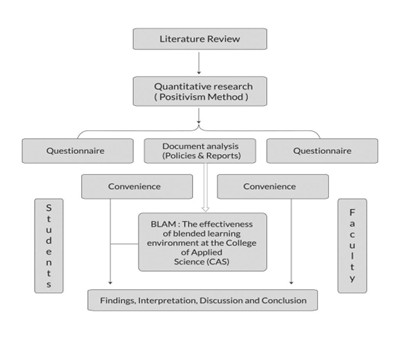
Research methodology services
- Tool Development Services
- Sample Work
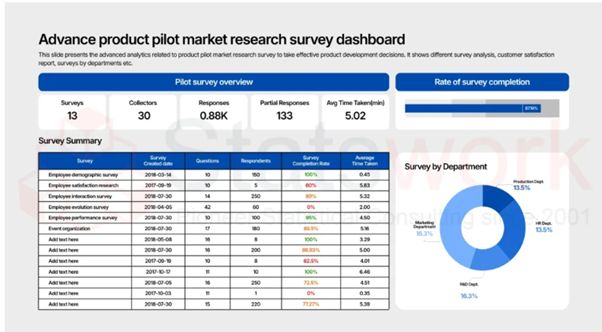
Tool development services
- Statistical Interpretation services
-
Statistical Interpretation services
- Sample Work
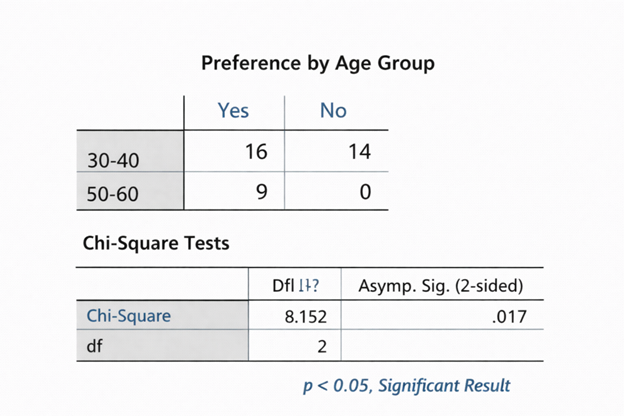
Statistical Interpretation services
-
- Sample Size Calculation Services
-
Sample Size Calculation Services
- Sample Work
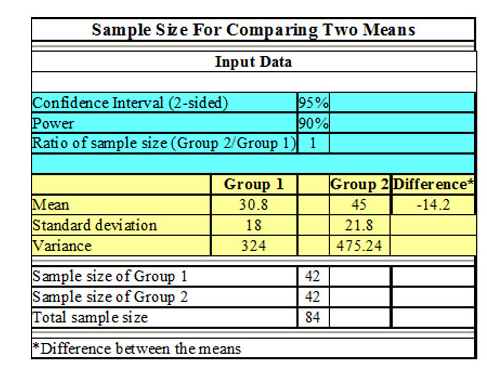
Sample Size Calculation Services
-
- AI & ML Services
-
Artificial Intelligence and Machine Learning Services
- Sample Work
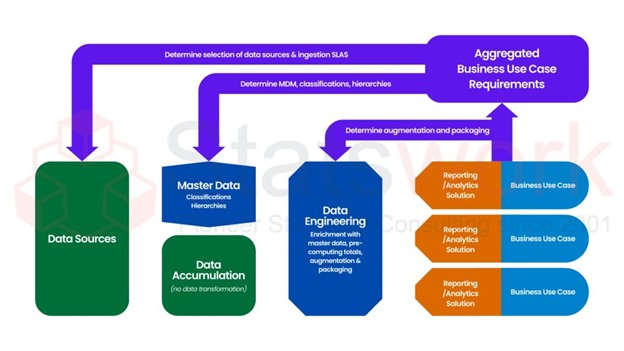
Artificial Intelligence and Machine Learning Services
-
- Meaningful Visualization Services
- Thought Leadership Services
- Report Generation Services
-
Report generation Service
- Sample Work
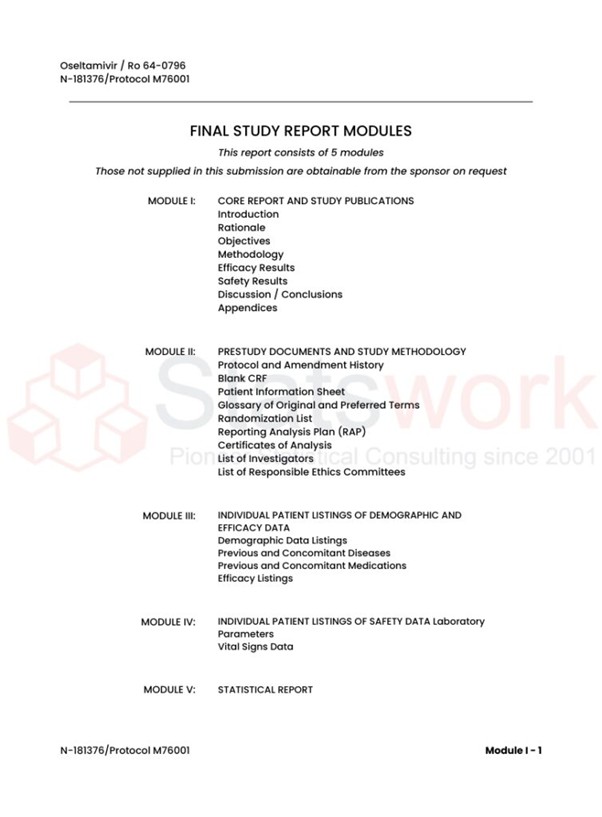
Report generation Services
-
- Data Analysis services
- Industries
- About Us
- Blog
- Insights
- Contact Us
- Services
- Data Analysis services
- Sample Work
Data Analysis services
- Secondary Qualitative Research Services
- Secondary Quantitative Research Services
- Meta-Analysis Research services
- Sample Work
Meta-Analysis Research Services
- Data Collection Services
- Sample Work
Data Collection Services
- Statistical & Biostatistics services
- Sample Work
Statistical Programming & Biostatistics services
- Data Management Services
- Sample Work
Data Management Services
- Research methodology services
- Sample Work
Research methodology services
- Tool Development Services
- Sample Work
Tool development services
- Statistical Interpretation services
-
Statistical Interpretation services
- Sample Work
Statistical Interpretation services
-
- Sample Size Calculation Services
-
Sample Size Calculation Services
- Sample Work
Sample Size Calculation Services
-
- AI & ML Services
-
Artificial Intelligence and Machine Learning Services
- Sample Work
Artificial Intelligence and Machine Learning Services
-
- Meaningful Visualization Services
- Thought Leadership Services
- Report Generation Services
-
Report generation Service
- Sample Work
Report generation Services
-
- Data Analysis services
- Industries
- About Us
- Blog
- Insights
- Contact Us
From Data to Regulatory Approval: Biostatistics & Statistical Programming for Precision, Compliance, and Impact
Qualitative Research Service
News & Trends
Recommended Reads
Contact us
Summary:
The article discusses how biostatistics and statistical programming can support pharmaceutical development from clinical research data and submission to the relevant regulatory authorities. The article highlights the importance of designing study, conducting statistical analysis, statistical programming to comply with CDISC standards, using validated software, and applying latest innovations and trends, including the use of artificial intelligence, while the importance of human expertise and regulatory compliance is emphasized. In general, the article discusses integrated biostatistics services that help meet global regulatory requirements, while enhancing the precision, efficiency, and credibility of research.
In pharmaceutical development, the pathway from clinical data to regulatory submission requires rigorous statistical rigor, validated methodology, and adherence to international standards. It takes a thorough understanding of statistics to achieve an efficient study design, conduct preclinical trials correctly, and prepare a regulatory document that will be approved by competent authorities. Biostatistics consulting services and statistical programming are the backbone of the whole process. This article will discuss why pharmaceutical companies choose our biostatistics consulting service and what we do to help our clients get their drugs approved.
Pillar 1: Precision Through Rigorous Biostatistics
Establishing Clear Study Objectives
Clear, measurable study objectives are foundational to accurate sample size calculation and biostatistics planning [4]. Researchers must differentiate between confirmatory studies (requiring formal hypothesis testing) and the exploration analyses (hypothesis generating studies for future investigations). Without specific objectives, sample size determination becomes arbitrary, and regulatory submissions become vulnerable to challenges [4].
Table 1: Study Design Framework
| Type of Study | Primary Objective | Method of Analysis | Approach to Sample Size |
| Confirmatory RCT | Test of efficacy | Hypothesis-driven | Calculation-driven |
| Pilot Study | Feasibility assessment | Description-driven | Rationale-driven |
| Diagnostic Test | Sensitivity/specificity | Confidence intervals | Precision-driven |
| Real-World Evidence | Effectiveness patterns | Observational methods | HEOR standards |
Advanced Statistical Methods
Modern clinical trials employ hierarchical endpoints and win statistics to capture multidimensional treatment effects [2]. Rather than relying on single primary endpoints, researchers establish clinically meaningful composite outcomes where more severe events are prioritized while health surrogates contribute supporting information [2]. This approach improves trial efficiency while maintaining scientific integrity.
Key Elements of Statistical Programming Services:
- CDISC-compliant SDTM dataset creation
- Analysis ready ADaM datasets
- TLF (Tables, Listings, Figures) generation using SAS programming
- Bayesian statistics implementation for adaptive designs
- Biometrics analysis workflows
Pillar 2: Compliance Through Validated Software
The Open-Source Revolution
The pharmaceutical industry must transition from using proprietary software to adopting proven open-source alternatives [3]. Tools such as R, if developed with appropriate validation frameworks, are now able to meet regulatory requirements when deployed within controlled environments. The R Validation Hub exemplifies the claim that opens source software can meet the requirements of CFR Part 11 (electronic records) and ICH E9 (statistical principles) [3].
Compliance Requirements Checklist:
✓ Software validation documentation (version control, build identification)
✓ Testing protocols demonstrate accuracy and reproducibility
✓ Risk assessment frameworks
✓ Code review processes ensuring quality assurance
✓ CDISC programming services meeting SDTM/ADaM standards
✓ TLF development following regulatory formatting standards
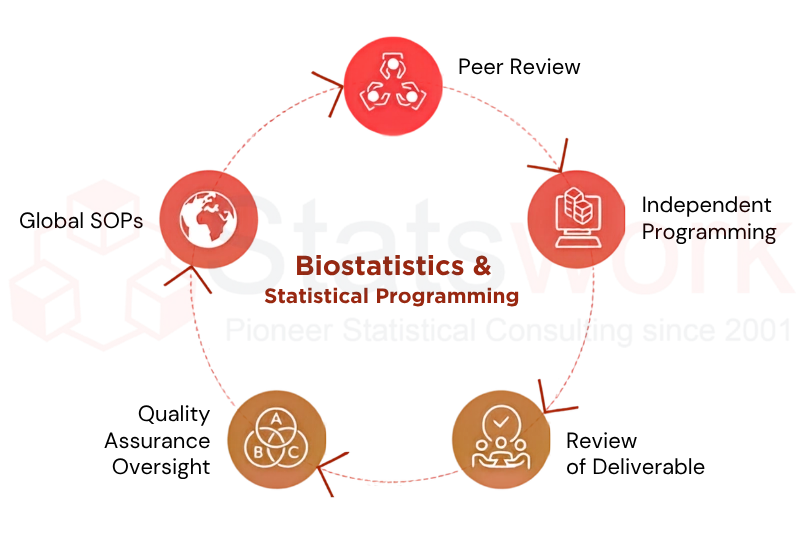
Why Statistical Programming Outsourcing?
Organizations increasingly outsource statistical programming services to specialized providers who maintain validated infrastructure, ensuring:
- Regulatory readiness – pre-built compliance frameworks aligned with FDA/EMA requirements
- Efficiency – 15–85% reduction in programming time through automation [3]
- Expertise – Access to specialists in SAS programming, CDISC standards, and HEOR methodologies
- Cost optimization – Eliminating redundant in-house development costs
Pillar 3: Impact Through Innovation
Generative AI in Biostatistics
Generative AI now augments biostatistics consulting workflows, assisting with sample size calculation verification, data analysis planning, and preliminary statistical code generation [1]. However, human oversight remains essential—AI outputs require independent verification before regulatory submission [1].
Table 2: AI Integration in Statistical Programming Services
| Application | AI Capability | Human Review Required |
| Sample size calculation support | Recommendation | ✓ Yes |
| Code generation | SAS/R code creation | ✓ Yes |
| Document preparation | Statistical section writing | ✓ Yes |
| Method comparison | Review of literature | ✓ Yes |
Real-World Evidence Integration
HEOR (Health Economics and Outcomes Research) increasingly combines clinical trial data with real-world evidence datasets, requiring specialized biostatistics outsourcing expertise. Bayesian statistics enable incorporation of prior evidence from observational studies into confirmatory designs, accelerating approval timelines while maintaining scientific credibility [2].
Solution: Integrated Biostatistics Services
Modern biostatistics services must deliver:
- Clinical biostatistics services addressing trial design, primary analysis, and regulatory strategy
- CDISC programming services ensuring data standardization (SDTM, ADaM)
- Statistical programming outsourcing with validated SAS/R/Python infrastructure
- Biostatistics consulting on novel endpoints, adaptive designs, and methodological innovation
- TLF production meeting submission requirements
Conclusion
The regulatory approval pathway demands precision in biostatistics, compliance through validated statistical programming practices, and measurable impact. Organizations leveraging biostatistics consulting and statistical programming outsourcing services demonstrate faster approvals, reduced costs, and enhanced credibility.
Statswork delivers this. Our biostatistics services and CDISC programming services accelerate approval timelines while maintaining scientific integrity. Partner with us to achieve regulatory success.
Ready to Accelerate Regulatory Approval?
[GET YOUR FREE REGULATORY READINESS ASSESSMENT]
The FDA drug development process is commonly described in five steps: discovery and development, preclinical research, clinical research, FDA review, and post-market safety monitoring.
Karl Pearson is commonly regarded as the father of modern biostatistics because of his foundational contributions to statistical methods and their application to biological and medical research.
21 CFR refers to Title 21 of the Code of Federal Regulations, which contains U.S. FDA regulations governing drugs, biologics, clinical investigations, and related requirements.
Drug approval requires adequate evidence of safety and effectiveness, appropriate labeling, and assurance that manufacturing processes and controls meet quality requirements.
Regulatory approval is the authorization granted by a regulatory agency, such as the FDA, after reviewing evidence that a drug’s benefits outweigh its known and potential risks for its intended use.
The four clinical trial phases are Phase 1 for initial safety and dosing, Phase 2 for preliminary efficacy and safety, Phase 3 for confirmatory efficacy and safety, and Phase 4 for post-approval safety monitoring.
Reference
- Weatherall, J., Meier, C., & Roundtable, D. D. I. (2026). Generative AI in pharmaceutical R&D: From large language models to AI agents to regulation. Drug Discovery Today, 104593. https://www.sciencedirect.com/science
- Abdellatif, M., Kim, Y., & Kroemer, G. (2026). Hierarchical endpoints and win statistics for geromedicine trials. Nature Aging, 1-11. https://www.nature.com/articles/s43
- Bové, D. S., Seibold, H., Boulesteix, A. L., Manitz, J., Gasparini, A., Günhan, B. K., … & Jaki, T. (2026). The statistical software revolution in pharmaceutical development: challenges and opportunities in open source. Drug Discovery Today, 104613. https://www.sciencedirect.com/
- Fong, D. Y., Chau, P. H., Lam, K. F., Lee, C. F., & Takemura, N. (2026). Essential tips on sample size calculation and biostatistics. Best Practice & Research Clinical Obstetrics & Gynecology, 102749. https://www.sciencedirect.com/science